
How to Ripen a Tomato
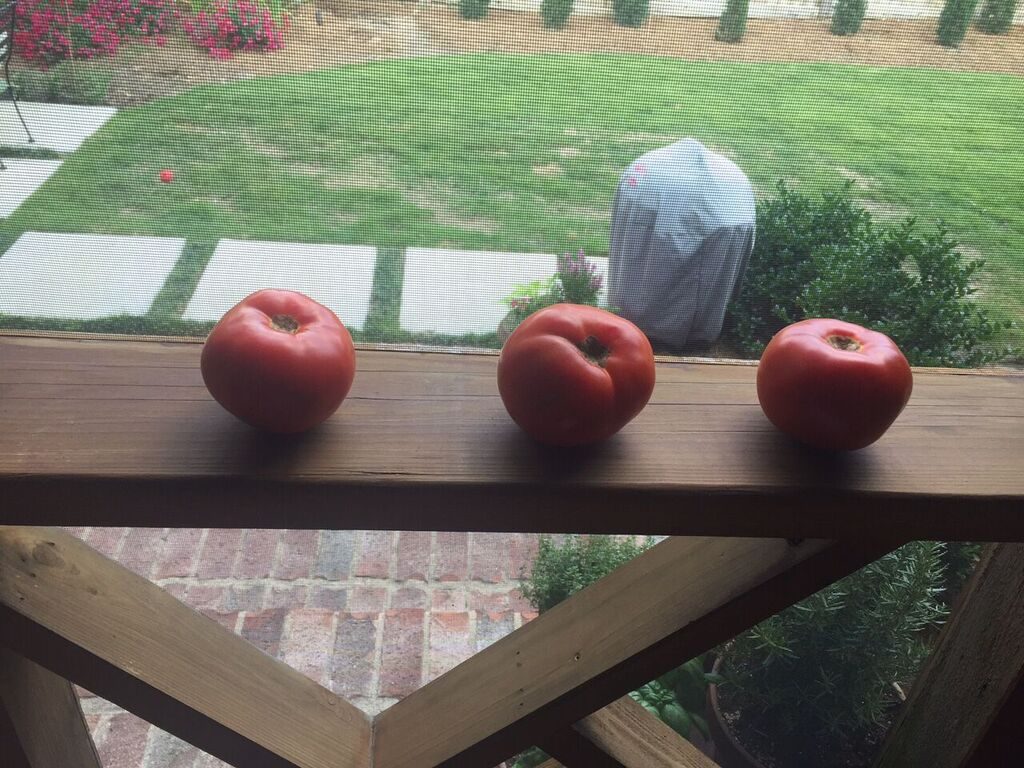
May 11, 2016, posted by Gina – One of my favorite things about moving from spring into summer is finding fresh, beautiful tomatoes at the farmers market close to my house. After a long winter of using cherry tomatoes I am ecstatic about finding these red jewels for the first time of the season.
I have been buying tomatoes that come from Florida for about a month now and they are pretty good. They’re not as good as homegrown, middle of the season tomatoes but they are certainly a welcome change. The other day I was selecting a few and an elderly lady beside me was doing the same. She was quick to tell me that the tomatoes we were looking at were very large and that I should give them time to ripen. At that moment I was carried back in time to my grandmother’s kitchen where her windowsill always held a few fresh tomatoes. I told the lady that I usually purchased them days in advance of eating them and placed them on my windowsill. She told me she does the same with a tone that indicated she’d never considered there could be any other ripening process.
This got me to thinking about exactly why we put tomatoes on the windowsill. So after a little research, I found that it is the temperature and not the light that helps to ripen the tomatoes.
While the science behind all of the research is interesting (ripening inhibitors, ethylene, epigenetic variation and such) the main thing to remember is to purchase them in advance and give them time to ripen.
Today the ones I bought are perched on a ledge on my back porch (not the windowsill this time!) and I know they will be deliciously ripe in a few days.




 May 8, 2016, posted by Michelle – La Voie Verte (The Green Way) is a long trail that cuts a straight line through the highest point of Caluire et Cuire, a small suburb of Lyon where I live. It’s a peaceful pathway built on an old rail line where people run, bike, walk their dogs and just enjoy nature. Midway along the trail is a very well maintained collection of mini gardens that reflects the horticultural history of the area. There’s also a small vistor’s center with an interactive display and a refreshment stand inviting you to linger a bit longer.
 Val Foron, located in the heart of Caluire, is one of only two remaining urban vineyards in greater Lyon. It was cultivated by Christian Brothers monks over 150 years ago and produces about 2,500 bottles of a Gamay – Pinot Noir blend annually. So, in the Voie Verte garden there’s a small terraced grouping of vines honoring Caluire’s wine making history. If you’d like to see the Val Foron vineyard and some of the dedicated volunteers who tend it and make the wine
  After WWI, community gardens became wildly popular as families could grow their own fruits and vegetables, including some local varieties like black turnips and
  Lastly, many religious institutions owned vast parcels of land in Caluire over the centuries. One type of garden found within these agricultural domains was called a “priest’s garden”. Usually laid out in the form of a cross, they grew flowers destined for chapels and churches, medicinal plants, herbs, fruits and vegetables. The mini gardens are a mini lesson in the history of Caluire!







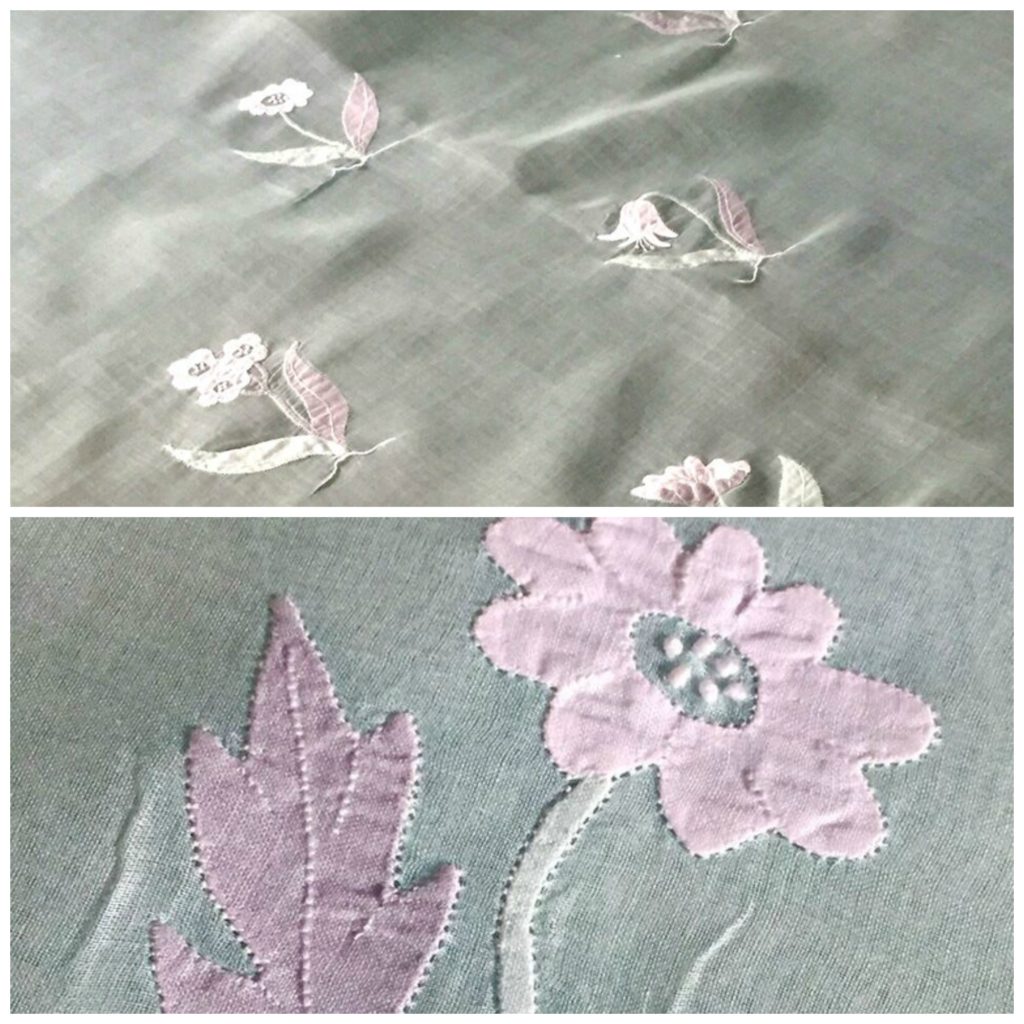 Recently, I found this beautiful mint green organza and linen table topper that I believe is from the 40’s or 50’s. This piece had been treasured and, no doubt, graced a beautiful table. Many times we find linens that are still in their original box with the tags still attached. But sometimes we find beautiful pieces that are slightly yellowed or stained.